
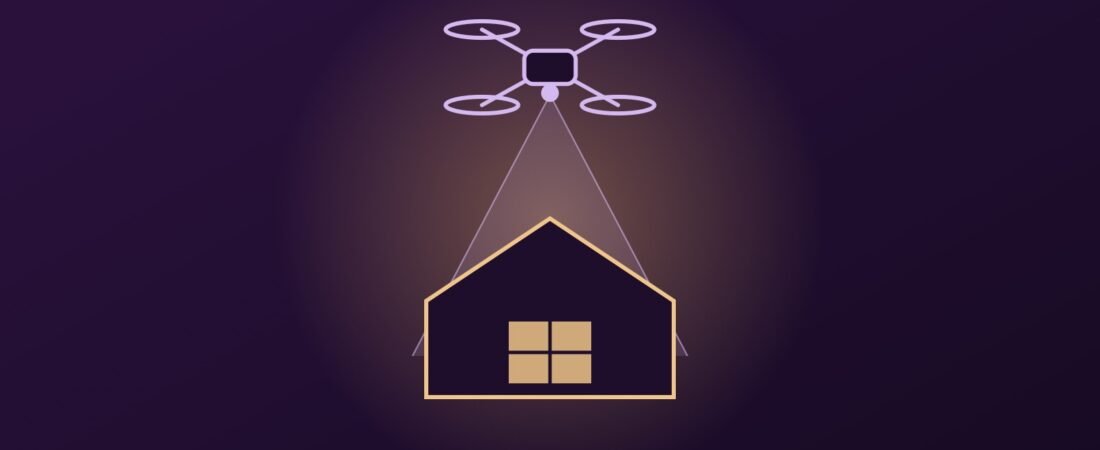
The Disappearing Boundary Wall
For centuries, the boundary wall was the physical expression of privacy. What could not be seen from the street was, for practical purposes, private. A drone fitted with a high resolution camera dissolves that assumption. It can hover over a terrace, look into a courtyard, follow an individual through a neighbourhood, and record faces in a crowd, often silently and at negligible cost. The question is no longer whether privacy can be invaded from the air, but whether the law is equipped to respond.
The Constitutional Foundation
In Justice K.S. Puttaswamy v. Union of India (2017), a nine judge bench of the Supreme Court recognised privacy as a fundamental right under Article 21, encompassing bodily, spatial and informational privacy. The Court also laid down that any intrusion by the State must satisfy the tests of legality, legitimate aim, necessity and proportionality. These principles apply squarely to aerial surveillance by police and other authorities, whether at protests, public gatherings or residential areas. A drone deployed by the State is not merely a camera on a pole; its mobility, persistence and capacity to aggregate data magnify its intrusiveness and demand correspondingly rigorous justification.
Private Intrusions and Existing Offences
The Drone Rules, 2021 are concerned principally with safety and airspace, and contain no comprehensive privacy code. Victims of private drone surveillance must therefore rely on the general law. Section 77 of the Bharatiya Nyaya Sanhita, 2023 punishes voyeurism, including capturing images of a woman engaged in a private act. Section 78 penalises stalking, which may include persistent monitoring. Section 66E of the Information Technology Act, 2000 punishes capturing or publishing images of a person’s private area without consent. Civil remedies for nuisance and invasion of privacy may also be pursued, though Indian tort law on aerial intrusion remains underdeveloped.
The Data Protection Dimension
Images and video that identify individuals are personal data. A business that uses drones for surveying, delivery or security and captures identifiable persons must, under the Digital Personal Data Protection Act, 2023, process that data lawfully, for specified purposes, with reasonable security safeguards. The Act, however, permits the Central Government to exempt instrumentalities of the State on grounds such as security and public order, a power that, unless exercised with restraint, could leave state drone surveillance largely outside the statute’s protection.
Towards a Coherent Framework
- A clear statutory standard for police use of drones, including authorisation, purpose limitation and retention periods.
- Privacy by design obligations for commercial operators, such as masking of incidental footage.
- Explicit offences for intrusive aerial recording of private spaces, irrespective of the victim’s gender.
- Public notice where drones are deployed for surveillance of gatherings.
The sky has become a vantage point of unprecedented power. Whether that power serves public safety or erodes personal liberty will depend on the safeguards we build today.
Readers seeking a fuller treatment may consult my book, Drone Laws in India: Regulation, Liability and Emerging Challenges (Allahabad Law Agency, 2026).